In today’s fast-paced digital world, Marketing Automation CRM is no longer a luxury—it’s a necessity. By seamlessly integrating customer relationship management with automated marketing workflows, businesses can boost efficiency, personalize customer experiences, and drive explosive growth.
What Is Marketing Automation CRM?

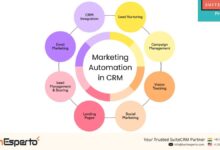
Marketing Automation CRM refers to the integration of customer relationship management (CRM) systems with marketing automation tools to streamline, automate, and measure customer interactions and marketing campaigns across multiple channels. This powerful synergy enables businesses to nurture leads, improve customer retention, and increase sales conversion rates—all with minimal manual effort.
Defining the Core Components
At its heart, Marketing Automation CRM combines two robust systems: CRM software, which manages customer data and interactions, and marketing automation platforms, which execute targeted campaigns based on user behavior and segmentation.
- CRM systems store vital customer information such as contact details, purchase history, and communication logs.
- Marketing automation tools use this data to trigger personalized emails, social media messages, and ads.
- Together, they create a closed-loop system where marketing efforts feed into sales insights and vice versa.
“The integration of CRM and marketing automation is the backbone of modern customer-centric marketing.” — HubSpot
How Marketing Automation CRM Differs from Traditional CRM
Traditional CRM systems are primarily sales-focused, designed to track leads and manage customer accounts. In contrast, Marketing Automation CRM expands this functionality by incorporating proactive marketing capabilities.
- Traditional CRM: Reactive, used mainly for logging calls and tracking deals.
- Marketing Automation CRM: Proactive, enabling lead scoring, behavior-based triggers, and campaign analytics.
- It bridges the gap between marketing and sales teams, ensuring alignment and shared KPIs.
For example, while a traditional CRM might record that a lead downloaded a whitepaper, a Marketing Automation CRM can automatically send a follow-up email series, score the lead based on engagement, and notify the sales team when the lead is sales-ready.
The Evolution of CRM and Automation
The journey from basic contact management to intelligent Marketing Automation CRM has been shaped by advances in AI, data analytics, and cloud computing. Early CRM systems in the 1990s were little more than digital Rolodexes. By the 2000s, CRM platforms began incorporating sales force automation. The real transformation came in the 2010s with the rise of marketing automation tools like Marketo, Pardot, and HubSpot.
- 1990s: Contact management and basic sales tracking.
- 2000s: Integration with email and call logging.
- 2010s: Emergence of cloud-based CRM and marketing automation.
- 2020s: AI-driven insights, predictive analytics, and omnichannel engagement.
Today, platforms like Salesforce Marketing Cloud and HubSpot CRM offer end-to-end solutions that unify marketing, sales, and service.
Key Benefits of Marketing Automation CRM
Implementing a Marketing Automation CRM system delivers measurable advantages across departments. From improving lead conversion to enhancing customer loyalty, the benefits are both strategic and operational.
Increased Lead Conversion Rates
One of the most significant advantages of Marketing Automation CRM is its ability to nurture leads effectively. Automated workflows guide prospects through the buyer’s journey with personalized content, increasing the likelihood of conversion.
- Automated email sequences can deliver relevant content based on user behavior.
- Lead scoring identifies high-intent prospects for immediate follow-up.
- Drip campaigns keep your brand top-of-mind without overwhelming the recipient.
According to Marketo, companies that use lead nurturing generate 50% more sales-ready leads at a 33% lower cost.
Improved Customer Segmentation and Personalization
Marketing Automation CRM enables hyper-personalized marketing by segmenting customers based on demographics, behavior, and engagement history. This level of personalization increases relevance and response rates.
- Segment users by lifecycle stage (e.g., new subscriber, repeat buyer).
- Trigger personalized offers based on browsing or purchase history.
- Use dynamic content in emails that changes based on user data.
“Personalization is not a nice-to-have; it’s expected. 80% of consumers are more likely to buy from brands that offer personalized experiences.” — Epsilon
Enhanced Sales and Marketing Alignment
One of the biggest challenges in business is the disconnect between sales and marketing teams. Marketing Automation CRM bridges this gap by providing shared visibility into lead status, engagement metrics, and campaign performance.
- Sales teams receive better-qualified leads with detailed engagement histories.
- Marketing gains insights into which campaigns drive actual revenue.
- Service teams can access customer journey data to provide context-aware support.
This alignment leads to faster deal cycles and improved customer satisfaction. A study by Salesforce found that companies with strong sales and marketing alignment achieve 36% higher customer retention and 38% higher sales win rates.
Top Marketing Automation CRM Platforms in 2024
Choosing the right Marketing Automation CRM platform is critical for success. The market is crowded, but several leaders stand out based on functionality, scalability, and ease of use.
Salesforce Marketing Cloud
Salesforce Marketing Cloud is a comprehensive solution for enterprise-level businesses seeking deep integration between CRM and marketing automation. It excels in omnichannel marketing, offering tools for email, social media, mobile, and advertising.
- AI-powered personalization with Einstein Analytics.
- Journey Builder for creating complex customer journeys.
- Strong integration with Salesforce Sales Cloud and Service Cloud.
Best for large organizations with complex customer journeys and dedicated marketing teams. Learn more at Salesforce Marketing Cloud.
HubSpot CRM and Marketing Hub
HubSpot offers one of the most user-friendly Marketing Automation CRM ecosystems, ideal for small to mid-sized businesses. Its free CRM is a major draw, and the Marketing Hub adds powerful automation features.
- Drag-and-drop workflow builder for easy campaign creation.
- Seamless integration between CRM, marketing, sales, and service hubs.
- Content management system (CMS) built into the platform.
HubSpot’s strength lies in its all-in-one approach and educational resources. Visit HubSpot Marketing Hub to explore its capabilities.
ActiveCampaign
ActiveCampaign is a rising star in the Marketing Automation CRM space, known for its advanced automation capabilities and affordability. It’s particularly strong in behavioral tracking and predictive sending.
- Site tracking and event-based automation.
- Predictive content and send time optimization.
- CRM with deal pipelines and task management.
Perfect for businesses that want powerful automation without the enterprise price tag. Explore it at ActiveCampaign.
How to Implement Marketing Automation CRM Successfully
Implementing a Marketing Automation CRM system requires more than just installing software. It demands strategic planning, cross-functional collaboration, and ongoing optimization.
Define Clear Goals and KPIs
Before deployment, establish what success looks like. Are you aiming to increase lead conversion by 25%? Reduce response time to inquiries? Improve customer lifetime value?
- Set SMART goals (Specific, Measurable, Achievable, Relevant, Time-bound).
- Identify KPIs such as lead-to-customer conversion rate, email open rates, and customer acquisition cost.
- Align these metrics across marketing, sales, and customer service teams.
Without clear objectives, even the best Marketing Automation CRM platform will underperform.
Map the Customer Journey
A successful implementation starts with understanding how customers interact with your brand. Map out each stage—from awareness to purchase to advocacy—and identify touchpoints where automation can add value.
- Awareness: Use blog content and social media ads to attract visitors.
- Consideration: Deliver lead magnets and nurture sequences via email.
- Decision: Send personalized offers and case studies.
- Loyalty: Automate post-purchase follow-ups and referral requests.
This journey map becomes the blueprint for your automation workflows.
Integrate Data Sources and Ensure Clean Data
Marketing Automation CRM is only as good as the data it uses. Siloed or inaccurate data leads to poor segmentation and irrelevant messaging.
- Integrate your website, email, CRM, and e-commerce platforms.
- Standardize data formats (e.g., phone numbers, email addresses).
- Regularly clean and deduplicate records.
Tools like Zapier or native integrations can help synchronize data across systems.
Advanced Features of Marketing Automation CRM
Modern Marketing Automation CRM platforms go beyond basic email automation. They offer intelligent features powered by AI, machine learning, and real-time analytics.
AI-Powered Lead Scoring and Predictive Analytics
AI-driven lead scoring analyzes hundreds of data points—such as email opens, page visits, and social engagement—to predict which leads are most likely to convert.
- Salesforce Einstein Lead Scoring assigns scores based on historical conversion data.
- HubSpot uses machine learning to identify patterns in high-value customers.
- Marketo’s predictive content recommends the best messaging for each lead.
These tools help sales teams prioritize efforts and increase close rates.
Behavioral Trigger Automation
Behavioral triggers are automated actions based on user behavior. For example, if a user abandons a cart, the system can send a reminder email within minutes.
- Website visit triggers: Send a welcome email after a first visit.
- Content download triggers: Follow up with related resources.
- Inactivity triggers: Re-engage users who haven’t opened emails in 30 days.
These micro-moments are critical for maintaining engagement and driving conversions.
Omnichannel Campaign Management
Today’s customers interact across multiple channels—email, social media, SMS, chat, and more. Marketing Automation CRM platforms now support omnichannel orchestration.
- Coordinate messaging across email, Facebook, Instagram, and WhatsApp.
- Ensure consistent branding and messaging tone.
- Track cross-channel engagement in a single dashboard.
For instance, a user who clicks a Facebook ad can be automatically added to an email nurture sequence, creating a seamless experience.
Common Challenges and How to Overcome Them
Despite its benefits, implementing Marketing Automation CRM comes with challenges. Recognizing these early can prevent costly mistakes.
Data Silos and Integration Issues
Many organizations struggle with disconnected systems—marketing on one platform, sales on another, and customer service elsewhere. This leads to inconsistent data and fragmented customer views.
- Solution: Choose a Marketing Automation CRM with strong API support and pre-built integrations.
- Use middleware like Zapier or Segment to connect disparate tools.
- Establish a single source of truth for customer data.
Over-Automation and Loss of Personal Touch
While automation saves time, overdoing it can make communications feel robotic and impersonal.
- Solution: Balance automation with human interaction. Use automation for routine tasks but allow for personalized follow-ups by sales reps.
- Include dynamic content and personalization tokens (e.g., first name, company).
- Regularly audit automated messages for tone and relevance.
Lack of Team Training and Adoption
Even the best Marketing Automation CRM will fail if teams don’t know how to use it. Resistance to change is common.
- Solution: Provide comprehensive training and ongoing support.
- Involve key stakeholders early in the selection process.
- Start with simple workflows and gradually scale complexity.
According to Gartner, 60% of marketing automation initiatives fail due to poor user adoption.
Future Trends in Marketing Automation CRM
The future of Marketing Automation CRM is shaped by emerging technologies and evolving customer expectations. Staying ahead of these trends ensures long-term competitiveness.
AI and Generative Content
AI is moving beyond analytics to content creation. Tools like ChatGPT and Jasper are being integrated into Marketing Automation CRM platforms to generate email copy, social posts, and product descriptions.
- Automated A/B testing of subject lines and CTAs.
- Dynamic content generation based on user profiles.
- Real-time optimization of campaign messaging.
Expect AI to handle up to 40% of content creation tasks by 2025, according to McKinsey.
Privacy-First Marketing
With increasing regulations like GDPR and CCPA, and the deprecation of third-party cookies, Marketing Automation CRM must adapt to a privacy-first world.
- Focus on first-party data collection through value exchanges (e.g., gated content).
- Implement consent management platforms (CMPs).
- Use zero-party data—information customers willingly share.
Brands that prioritize transparency and consent will build stronger trust and loyalty.
Hyper-Personalization at Scale
The next frontier is delivering one-to-one experiences at scale. Marketing Automation CRM will leverage real-time data and AI to tailor every interaction.
- Personalized pricing and product recommendations.
- Context-aware messaging based on location, weather, or device.
- Adaptive customer journeys that evolve with user behavior.
For example, a travel company could automatically suggest last-minute deals to a user who frequently searches for weekend getaways.
Measuring the ROI of Marketing Automation CRM
Investing in Marketing Automation CRM requires justification. Measuring return on investment (ROI) helps demonstrate value and guide future decisions.
Key Metrics to Track
To evaluate success, monitor a mix of marketing, sales, and customer experience metrics.
- Cost per lead (CPL): Total marketing spend divided by number of leads.
- Lead-to-customer conversion rate: Percentage of leads that become paying customers.
- Customer acquisition cost (CAC): Total sales and marketing cost to acquire a customer.
- Customer lifetime value (CLV): Total revenue a customer generates over their lifetime.
- Marketing-qualified lead (MQL) to sales-qualified lead (SQL) conversion rate.
These metrics should be tracked before and after implementation to measure impact.
Calculating Financial ROI
ROI is calculated as (Gain from Investment – Cost of Investment) / Cost of Investment.
- Example: If your Marketing Automation CRM costs $10,000/year and generates $50,000 in additional revenue, ROI = ($50,000 – $10,000) / $10,000 = 400%.
- Include time savings—e.g., 10 hours/week saved on manual tasks = $25,000/year in labor costs.
- Factor in improved customer retention and upsell rates.
A study by NAIC found that companies using marketing automation see an average ROI of 350%.
Continuous Optimization and A/B Testing
ROI isn’t a one-time calculation. Continuous improvement through testing is essential.
- Run A/B tests on email subject lines, CTAs, and landing pages.
- Optimize automation workflows based on engagement data.
- Use cohort analysis to understand long-term customer behavior.
The most successful companies treat their Marketing Automation CRM as a living system—constantly refined and improved.
What is Marketing Automation CRM?
Marketing Automation CRM is the integration of customer relationship management (CRM) software with marketing automation tools to streamline customer interactions, automate campaigns, and improve sales and marketing alignment.
What are the best Marketing Automation CRM platforms?
Top platforms include Salesforce Marketing Cloud for enterprises, HubSpot for SMBs, and ActiveCampaign for advanced automation at an affordable price.
How does Marketing Automation CRM improve lead conversion?
It improves conversion by nurturing leads with personalized content, scoring leads based on engagement, and delivering timely follow-ups through automated workflows.
Is Marketing Automation CRM suitable for small businesses?
Yes, platforms like HubSpot and ActiveCampaign offer scalable, affordable solutions ideal for small businesses looking to grow efficiently.
How do you measure the success of a Marketing Automation CRM?
Success is measured through KPIs like lead conversion rate, customer acquisition cost, email engagement, and overall ROI from marketing campaigns.
Marketing Automation CRM is no longer optional—it’s a strategic imperative for businesses aiming to thrive in a digital-first world. By unifying customer data with intelligent automation, companies can deliver personalized experiences, align sales and marketing, and drive measurable growth. From choosing the right platform to overcoming implementation challenges and measuring ROI, success lies in a thoughtful, data-driven approach. As AI, privacy regulations, and customer expectations evolve, the future of Marketing Automation CRM will be defined by hyper-personalization, ethical data use, and seamless omnichannel experiences. The time to act is now: invest in the right tools, train your teams, and start building smarter, more responsive customer relationships today.
Further Reading:
